Clamshells: Your Gluteus Medius’ Best Friend
Thank you to Julianna for contributing to our blog (and with an exercise that is held dear to our hearts!)
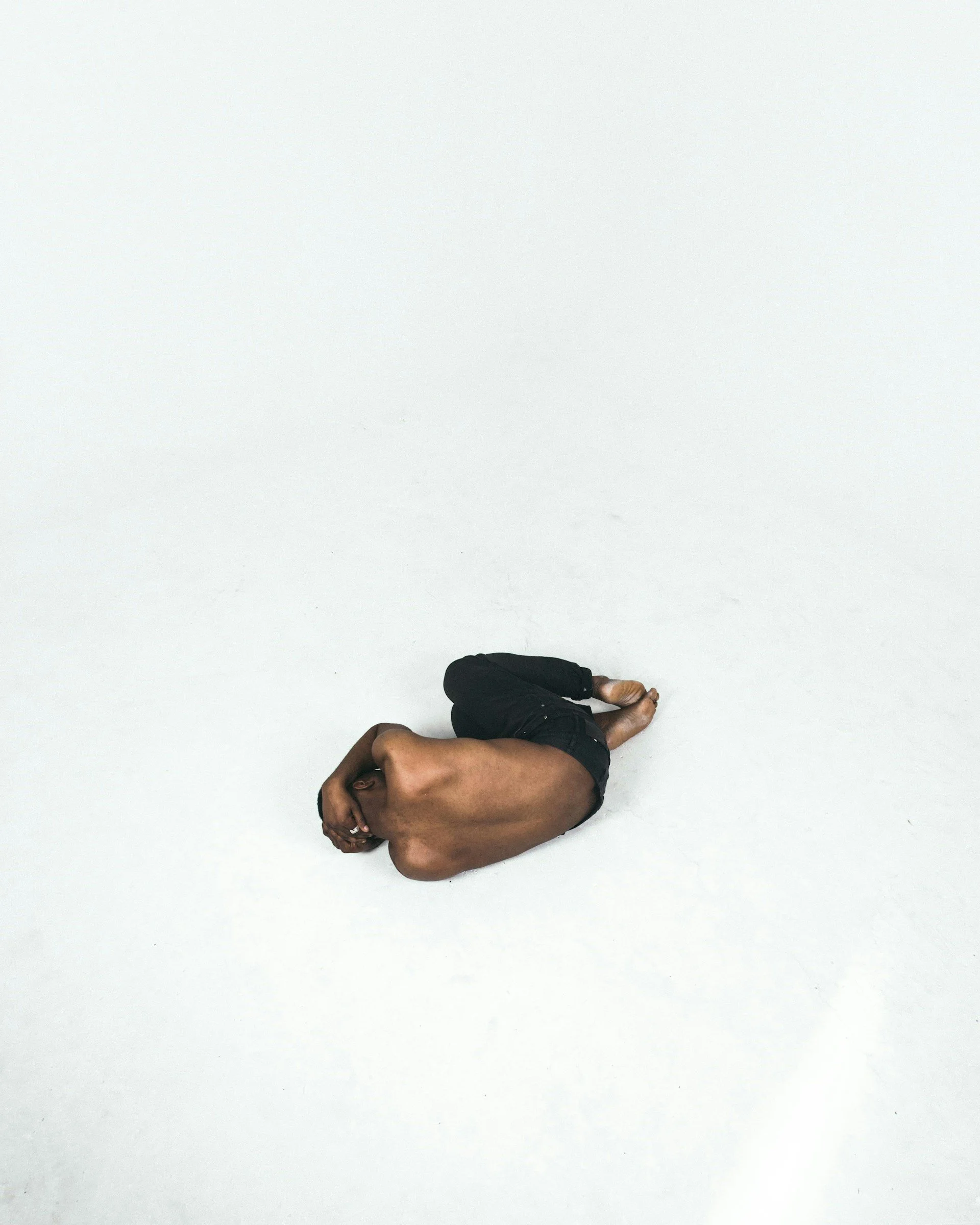
This is not an exaggeration of how we should be tucked in for our clamshells!
If you’ve ever had an injury, you probably know that the human body is pretty good at making modifications. If you hurt your ankle, you start to limp. If you hurt your shoulder, you use the other arm. Our bodies are good at finding the path of least resistance: ways to work around areas that are painful and/or weak by relying on other muscles or changing how we move. A common example of this is the role of our gluteus medius muscle.
Glute Med: My Argument on why it’s unfairly named:
Despite being secondary in name to the gluteus maximus, our gluteus medius (or glute med for short) is just as important. It is the prime mover in abducting our hip (bringing it to the side away from the body) and is hugely important in providing stability to our hips in single leg tasks. While you may not think about yourself standing on one foot often, we spend a lot more time on one leg than you may realize: walking, running, and going up and down stairs are all common activities that require spending time on one leg and thus depending on hip stability.
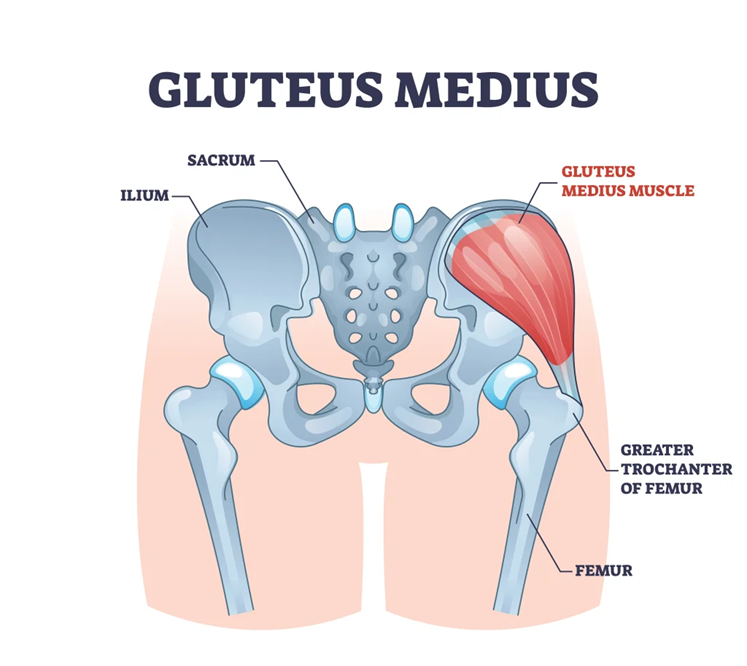
Image sourced from: OrthoNeuro
Despite its important role, as mentioned, our bodies are great at finding easy ways to make things work. Thus, the glute med is weak in many individuals. We tend to rely on other muscles that do abduction or our hip flexors. This can result in other issues ranging from tightness in the hip flexors and low back, pain along the IT-band, to being at increased risk for other injuries. Gluteus medius dysfunction has been linked to achilles tendinopathy and weakness is often seen in individuals with chronic non-specific low back pain. It’s all connected!
So what is a “Clamshell”?
To strengthen this muscle, our best friend is going to be the clamshell exercise. It is a physiotherapy staple but takes the right set up and some practice to get it right.
Clamshell set up:
- Tie your fitness band tightly around your thighs and have it sitting just above your knees
- Lie on your side with your hips stacked on top of one another
- Have your hips and knees bent up
Ideally, bend your knees and hips to be crunched up, like a fetal position. This helps isolate the glute med by giving the other muscles less opportunity to take over. However, this position doesn’t work for everyone as it requires quite a bit of mobility - so bend your hips and knees to a level that works for you!
- Keeping your feet together, lift your top knee off your bottom one
- Lift until your hips start to open up / are no longer stacked
It’s a smaller movement than you may think and a great case of more ≠ better
- With control, lower your knee back to touch the bottom one
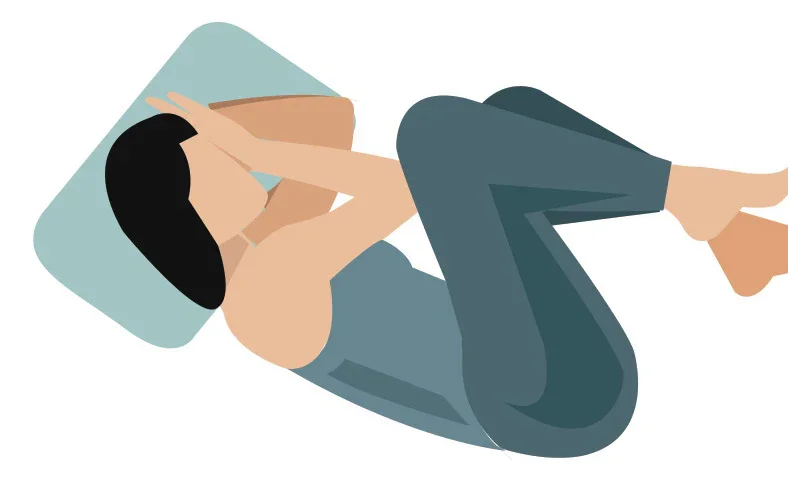
Often a comfortable sleeping position and a great set-up for your clamshells!
Some helpful tips:
Keep your hips stacked!
If you take only one tip away from this post it is that the most common mistake is letting your body cheat by “opening up” through your top hip.
A helpful tip can be doing this with your body against a wall so you have less room to tilt backwards
Lean your upper body forwards
This is helpful in reinforcing that your hips stay stacked and can help bring your hips into a position that limits some of the muscles that often take over
Place your hand on your glutes
This can be helpful in keeping yourself rolled forwards and serving as a reminder to where you should be feeling it. If the soreness is going down the back of your leg, it can be helpful to tuck up more
If it feels too easy, change the band or slow it down
The slower you go = more control needed = harder the movement is
Upping the resistance of your band is also helpful as you get stronger
So now you’re set! Grab your band and good luck!
References
1. Semciw A, Neate R, Pizzari T. Running related gluteus medius function in health and injury: A systematic review with meta-analysis. Journal of electromyography and kinesiology. 2016;30:98-110.
2. Cooper, N. A., Scavo, K. M., Strickland, K. J., Tipayamongkol, N., Nicholson, J. D., Bewyer, D. C., & Sluka, K. A. (2016). Prevalence of gluteus medius weakness in people with chronic low back pain compared to healthy controls. European Spine Journal, 25(4), 1258-1265. https://doi.org/10.1007/s00586-015-4027-6
Thanks again to Julianna for putting this together! I hope you’ve found it useful in your exercise journey!