Hippotherapy: The Therapeutic Power of the Horse
Thank you to our student, Courtney Hall, for contributing this piece for our website!
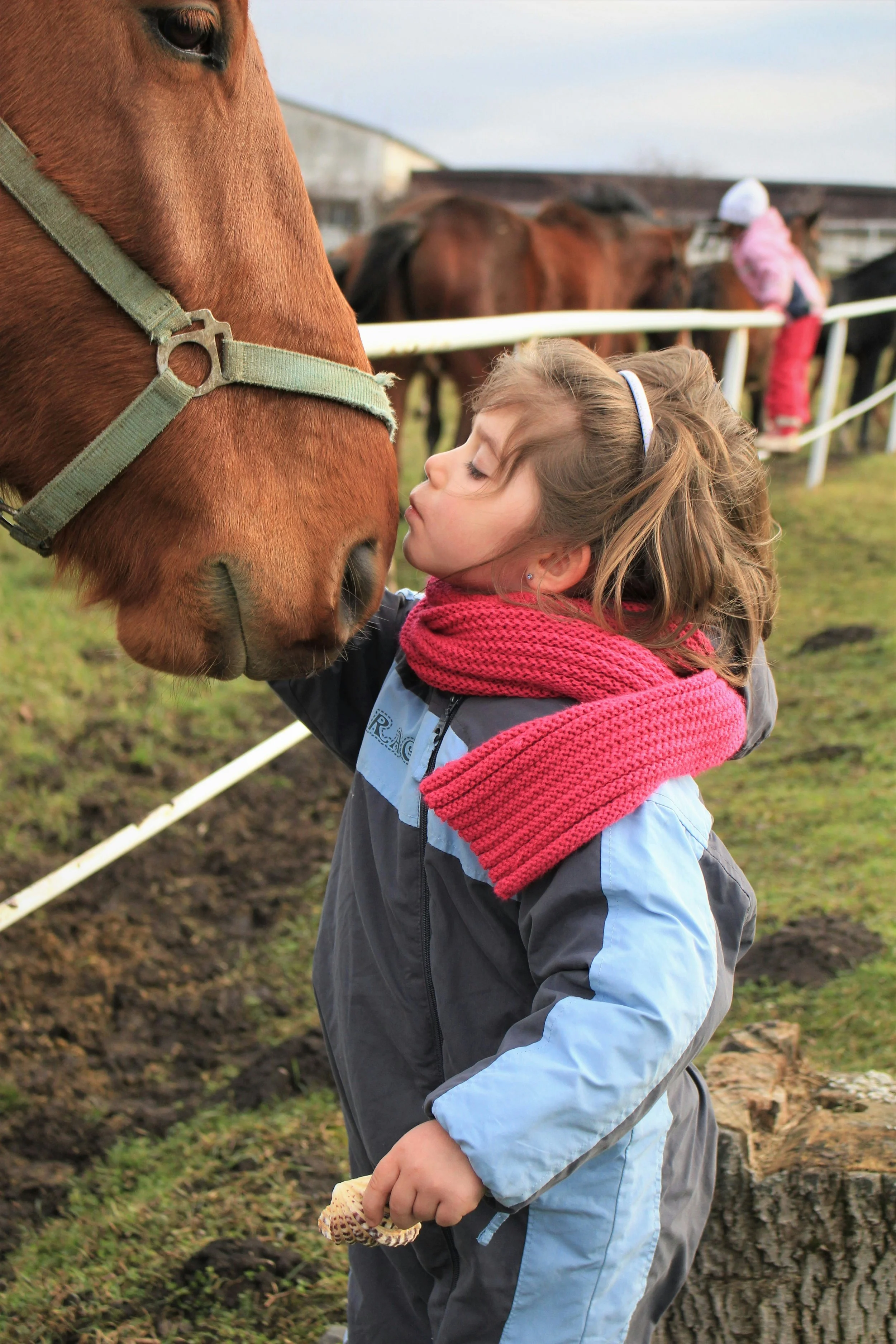
What if your physiotherapy session involved a horse?
When most people hear the words “horse therapy,” they probably picture something different based on their own experience. Maybe you picture a childhood spent at the barn, muddy boots, and hours in the saddle. Maybe you've always wanted to ride but have never been around horses. Or maybe you land somewhere in between. Regardless of your experience, you might not immediately think of physiotherapy. However, the movement of a horse can provide a surprisingly complex physical challenge. With every step, the horse creates movement underneath the rider, requiring the rider’s body to constantly respond and adapt. This is the foundation of hippotherapy.
So…what exactly is hippotherapy?
The American Hippotherapy Association (AHA) defines hippotherapy as “the purposeful manipulation of equine movement as a therapy tool to engage sensory, neuromotor and cognitive systems to promote functional outcomes” (AHA, 2022). In simple terms, a healthcare professional, such as a physiotherapist, occupational therapist, or speech-language pathologist, intentionally uses the horse's movement as a therapy tool to work toward functional goals.
Every step is an input
Think about walking. You probably don't have to consciously think about where your pelvis should move, how much your trunk should rotate, or which muscles need to activate with each step. Your body simply responds.
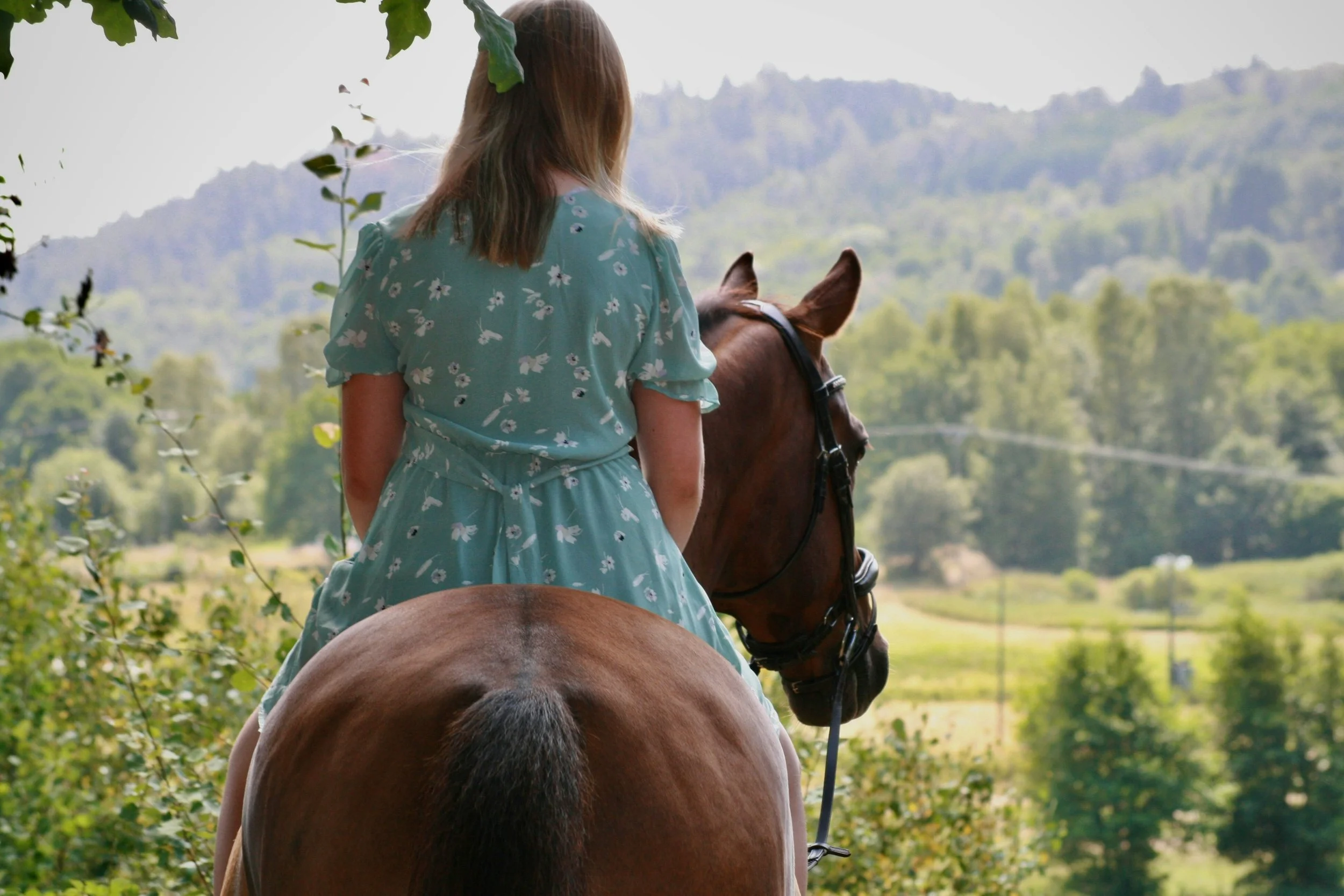
Now imagine sitting on an animal that is constantly moving underneath you. A horse doesn't follow a perfectly predictable path or give you the same movement twice. A turn shifts the rider's weight. Stopping requires a postural adjustment. Even a simple walk becomes a continuous conversation between the horse and the human body. For someone who rides regularly, these adjustments can become almost invisible; you simply move with the horse. But from a physiotherapy perspective, this creates a unique opportunity to challenge movement in a way that is dynamic, rhythmic, and constantly changing.
In hippotherapy, the therapist can change the horse's speed, direction, rhythm, or movement pattern to create a different challenge while still working toward the same functional goal. The horse therefore becomes more than a way to make therapy interesting; it provides a constantly changing environment rather than a fixed exercise surface.
Your brain doesn't get a break!
Hippotherapy isn't only about what the body is doing. The horse also provides a constantly changing sensory and cognitive environment. The rider receives information through movement, touch, vision, and the vestibular system while simultaneously having to respond to what is happening around them.
This combination can make hippotherapy a highly engaging form of rehabilitation. Instead of completing an exercise in a predictable clinic environment, the person has to continually adapt to a living, moving environment. And for our brains and nervous system, that exposure to variability matters.
Who is hippotherapy for?
The specific use of equine movement to provide physiotherapy services does not discriminate against age. While pediatric populations have been more heavily researched in hippotherapy, the horse doesn’t know how old you are. The same need to adjust to changes in speed and direction in children, can be used and be effective to challenge adults with a variety of conditions (Diniz et al., 2020).
Rehabilitation doesn't have to look like rehabilitation
An important principle in physiotherapy is providing individual, person-centred care. This means considering not only what exercises or treatments might help someone physically, but also what will motivate them to participate and what activities are meaningful to them. Sometimes rehabilitation looks like a set of squats in a clinic. But, sometimes it can look like sitting on a horse. The therapeutic goal does not necessarily have to change just because the environment does.
There is something to be said for enjoying the process of rehabilitation. Finding an activity that feels meaningful, novel, or enjoyable can help people stay engaged and motivated to participate. The social and enjoyable nature of working with horses supports participation and motivation across the entire lifespan and allows the physiotherapist to carefully use the horse to work toward a rehabilitation goal (AHA, 2022; Conroy et al., 2023; Guindos-Sanchez et al., 2020).
The Takeaway
Physiotherapy is ultimately about helping people move through their lives with greater confidence, independence, and participation. The research evidence is promising, but hippotherapy is not a cure-all. Instead, it is meant to be one tool in a physiotherapist’s toolbox for treatment, just like ultrasound or exercise is. Studies vary considerably in their populations, treatment protocols, and outcome measures, and more high-quality research is needed to determine exactly who benefits most and how (Marquez et al., 2022).
What is clear, however, is that a horse can offer something that is difficult to recreate in a traditional clinic: a dynamic, three-dimensional, constantly changing environment that asks the body to adapt at a higher rate than other treatment techniques. In the end, the goal of hippotherapy isn't to teach someone how to ride a horse. It is to use the horse to help you move better in the rest of your life, and maybe that's the real therapeutic power of the horse.
“A horse is poetry in motion.”
References:
American Hippotherapy Association, Inc. (2022). Part I: Hippotherapy Treatment Principles Course Manual Sixth Edition. https://www.americanhippotherapyassociation.org/what-is-hippotherapy
Conroy, S., Evans, T., Butler-Moburg, D., Beuttler, R., Robinson, J., Huebert, M., O Mahony, E., & Grant-Beuttler, M. (2023). Clinical application and feasibility of utilizing the PEDI-CAT to assess activity and participation among children receiving physical therapy incorporating hippotherapy. Physiotherapy Theory and Practice, 39(11), 2300–2313. https://doi.org/10.1080/09593985.2022.2072250
Diniz, L. H., de Mello, E. C., Ribeiro, M. F., Lage, J. B., Bevilacqua Júnior, D. E., Ferreira, A. A., Ferraz, M. L. da F., Rosa, R. C., Teixeira, V. de P. A., & Espindula, A. P. (2020). Impact of hippotherapy for balance improvement and flexibility in elderly people. Journal of Bodywork and Movement Therapies, 24(2), 92–97. https://doi.org/10.1016/j.jbmt.2019.10.002
Guindos-Sanchez, L. D., Lucena-Anton, D., Moral-Munoz, J. A., Salazar, A., & Carmona-Barrientos, I. (2020). The Effectiveness of Hippotherapy to Recover Gross Motor Function in Children with Cerebral Palsy: A Systematic Review and Meta-Analysis. Children, 7(9), 106. https://doi.org/10.3390/children7090106
Marquez, J., Weerasekara, I., & Chambers, L. (2020). Hippotherapy in adults with acquired brain injury: A systematic review. Physiotherapy Theory and Practice, 36(7), 779–790. https://doi.org/10.1080/09593985.2018.1494233
Again, a big thank you to Courtney! We hope you enjoyed the post!